
Outdoor furniture materials should be compared as complete systems, not as isolated labels. A frame, surface finish, woven component, cushion and fixing can face different exposure and maintenance demands even when they appear in one item. Start with each furniture zone, record its conditions, then ask for the exact proposed construction and evidence that applies to it.
Discuss materials for your outdoor project

Compare materials only after the exposure brief is clear
Divide the project by actual placement: open pool deck, covered dining terrace, coastal edge, rooftop, shaded garden or seasonal storage area. The label “outdoor” is too broad for a project decision. Record direct sun, wind-driven rain, salt deposits, wet-user contact, cleaning chemicals, movement frequency and available dry storage for every zone.
Use the Outdoor Exposure Checklist to make one record per area. Give the same record to each supplier so proposed systems can be compared against the same conditions.
Material-system comparison
| System | Design value to assess | What must be identified | Operational question |
|---|---|---|---|
| Metal frame and finish | Section size, visual lightness, moving weight and connection layout | Frame material, section, joints, drainage, finish build-up, hardware and feet | How are chips, loose fixings and trapped water inspected and handled? |
| Teak or other wood | Natural appearance, touch and how visible variation fits the design intent | Species, source, grade or selection basis, joint construction, finish and approved sample | What appearance change is acceptable, and who performs the specified care? |
| Rope system | Back support, hand feel, openness and visual rhythm | Fibre or cord construction, frame interface, terminations, tension and repair route | Can staff clean behind the weave and identify damage before it spreads? |
| Synthetic rattan system | Woven surface, edge form, seating profile and visual density | Strand construction, inner frame, weave pattern, edge closure and component evidence | How will deposits be removed from the weave and damaged areas be assessed? |
| Fabric and cushion | Comfort, colour, pattern, removable parts and drying strategy | Cover fabric, seams, closures, liner, fill, base support, fastening and replacement reference | Where will wet cushions dry, and how will covers and fills be tracked for replacement? |

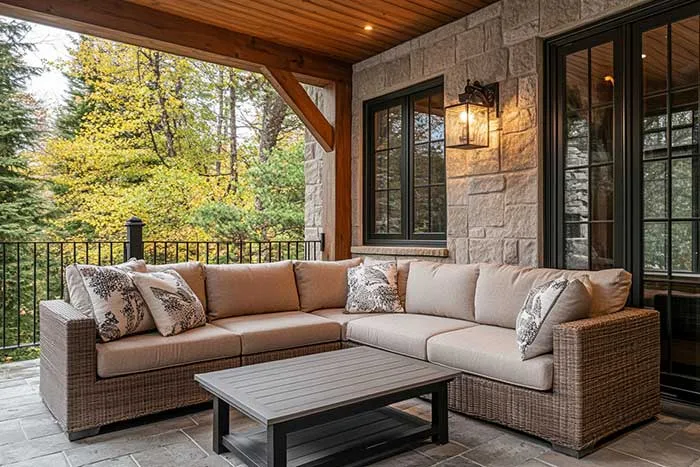

Review the interfaces, not only the headline material
Many service difficulties begin at an interface: a fastener through a finished frame, a woven edge around a corner, a cushion retained against a wet base, a foot in contact with paving, or two materials that move and dry differently. Ask the supplier to show each interface on a sample, drawing or clear photograph and to identify which detail will be used for the quoted configuration.
- Frame to ground: foot type, adjustability, replaceable glides, drainage and contact with paving or decking.
- Frame to secondary material: fixing method, protected edges, movement allowance and access for cleaning or repair.
- Seat to cushion: support, retention, water path, removal method and storage routine.
- Visible finish to maintenance: approved cleaner, prohibited cleaner, inspection point and touch-up or replacement route.
Approve a useful sample set
A small colour chip may settle appearance but cannot answer construction questions. Match the sample to the decision:
- a finished frame corner or connection when joint quality and finish coverage matter;
- a woven corner or edge when tension, termination and cleanability matter;
- a fabric swatch plus the proposed cushion build-up when comfort, seams, drying and replacement matter;
- a control sample or signed schedule with project code, colour, texture and allowed variation when later batches must be compared.
Check every certificate or test report for the tested material, construction, method, date, result and relevance to the offered component. Use documents that name or clearly cover the proposed material and use condition.
What to send for a material review
- area schedule, drawings, furniture types and approximate quantities;
- the exposure record for each area, including cleaning products and storage limits;
- the intended appearance and acceptable change over time;
- parts that must be removable, stackable, replaceable or matched in later phases;
- required samples, submittal format and any destination-specific evidence;
- destination, project stage and target approval date.
Use the detailed guides for aluminum systems, teak and wood, rope, synthetic rattan, and fabrics and cushions. For use after handover, see Care & Storage Planning.