
Synthetic rattan furniture should be reviewed as a woven surface over a supporting frame, with edge closures, feet, hardware and cushions forming part of the same system. The words “rattan,” “wicker” or “all-weather” do not identify a strand formulation, construction or proven performance for a particular project.
Review a synthetic rattan proposal
Confirm what sits behind the visible weave
| Layer | Information to request | Sample check |
|---|---|---|
| Strand or strip | Material description, profile and thickness reference, colour, surface texture, batch identification and relevant test evidence. | Colour range, consistency, bends, surface feel and any marks caused by weaving. |
| Inner frame | Frame material, sections, joints, finish, drainage, hardware and feet. | Underside, corners, frame contact and parts hidden by the weave. |
| Weave | Pattern, density, tension, start and finish points, and how the pattern changes at curves or corners. | Evenness, openings, user-contact areas and access for cleaning. |
| Edges and terminations | How strands end, how exposed edges are protected and whether local repair is possible. | Seat edges, arms, feet, corners and any place a loose end could contact users. |
| Cushion interface | Support, retention, drainage, removability and the exact fabric and fill proposed. | How water and debris leave the seat base after the cushion is removed. |
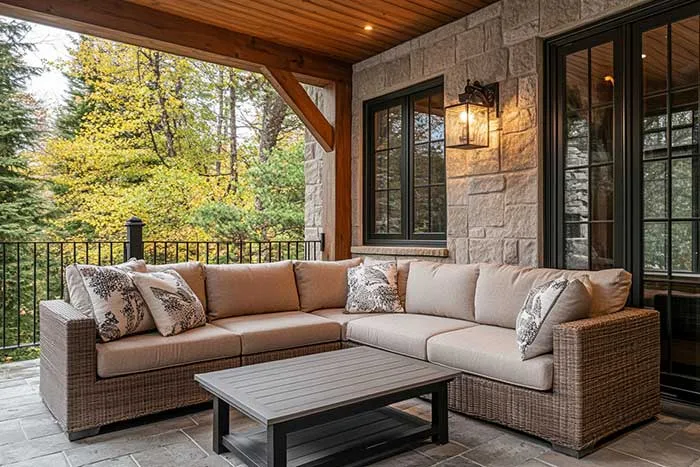
Relate the system to actual exposure
Give the supplier a zone-specific exposure record. If sun, salt deposits, pool splash, cleaning chemicals or long wet periods matter, request evidence for the exact strand, colour, frame and construction offered. Check the document’s tested object, method, date, result and limitations; do not rely on a category-wide “weatherproof” description.
Inspect what a catalogue view hides
- turn the sample over to see the inner frame, joints, feet, drainage and loose ends;
- inspect changes in weave direction at arms, seat edges, corners and curves;
- check whether staff can reach behind the weave and remove deposits without damaging it;
- review the seat base after the cushion is removed, including water and debris paths;
- ask how abrasion, a broken strand or a loose edge is assessed, repaired and colour matched.
Approve appearance and later matching
A small strand sample can settle colour and texture, but construction approval should use a representative corner or a full item. Record strand reference, colour, weave pattern, density, inner-frame finish and edge treatment. For phased procurement or replacements, ask what reference will be retained and how acceptable variation will be judged.
Information to prepare for an enquiry
- furniture type, dimensions, quantities and zone plan;
- exposure, cleaning products, use intensity, movement and storage routine;
- desired strand profile, colour, texture and weave density;
- cushion requirements and the need for removable or replaceable parts;
- sample format, evidence requirements and repair expectations;
- destination, project stage, approval date and later-phase matching needs.
For corded or rope-wrapped furniture, use the separate Rope Outdoor Furniture checklist. Use Care & Storage Planning to turn the approved supplier instructions into an operating routine.