
Poolside and beach-club applications
Pool and beach furniture sits inside a wet, high-movement operating zone. Map the water edge, clear routes, lounger rows, cabanas or daybeds, towel service, food-and-beverage points and storage before choosing a frame, cushion or finish.
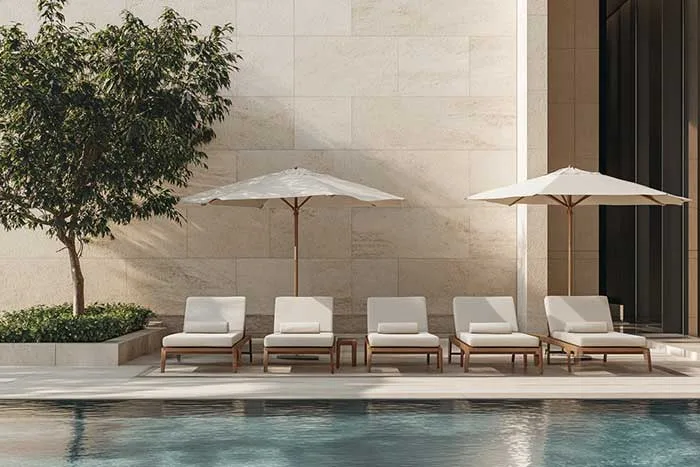
Wet-zone map
Divide the deck by activity and exposure
| Zone | Furniture question | Site information needed |
|---|---|---|
| Water edge | Where can loungers sit without conflicting with circulation or pool operations? | Pool outline, local clear-route requirements, drains, steps, rescue and maintenance access. |
| Primary lounger rows | Which posture, adjustment, side-table and shade relationships are required? | Guest capacity, row depth, orientation, moving method and towel service. |
| Cabanas or daybeds | Is the space for couples, groups, booking, food service or longer stays? | Platform dimensions, privacy, access, soft-goods handling and fixed-structure responsibility. |
| Food-and-beverage edge | Do dining, bar or lounge pieces interfere with wet traffic? | Service path, spill cleaning, floor condition, furniture movement and closing layout. |
| Beach or marina zone | How do sand, salt exposure, uneven ground and daily movement change the brief? | Distance from water, exposure, ground support, cleaning water, storage and approved fixing method. |
Clearances, safety provisions and accessibility requirements are project- and jurisdiction-specific. The project team should establish them before furniture quantities are frozen; a category image cannot set those dimensions.
Configuration evidence
Ask what the proposed sample or report actually proves
Frame and finish
Identify the exact material, construction and finish proposed. Ask which sample or document applies to that configuration and exposure; do not transfer a result from another item.
Hardware and contact points
Review fasteners, glides, wheels, adjustment points and floor contact. Confirm replacement and maintenance access rather than assuming one standard hardware package.
Fabric, fill and drying
Ask how covers are removed, how water leaves the cushion, where wet cushions are held, how they are cleaned and which soft-good test or sample applies.
Salt, pool water and cleaners
Provide the actual environment and cleaning products. Request evidence relevant to the quoted materials without turning a general material claim into a site-wide guarantee.
Operating views
Review circulation, zoning, time of day and coastal exposure separately
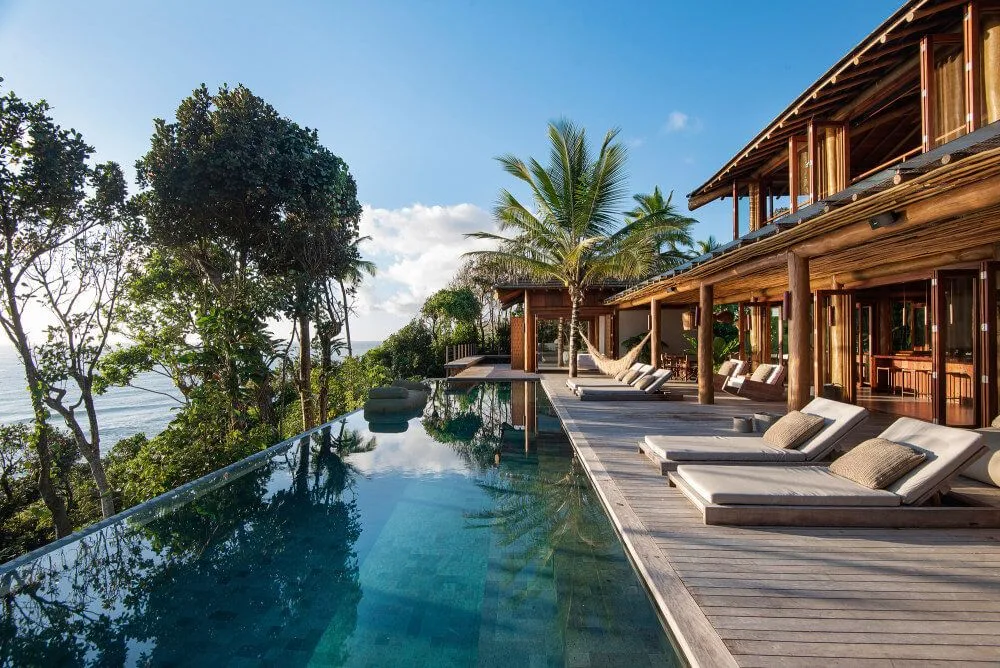
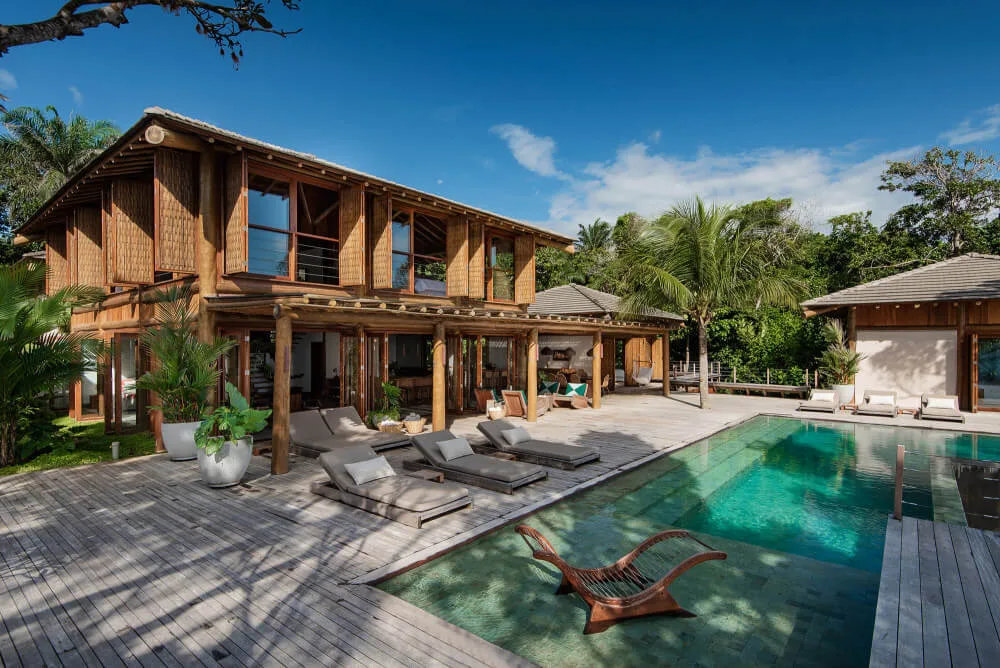
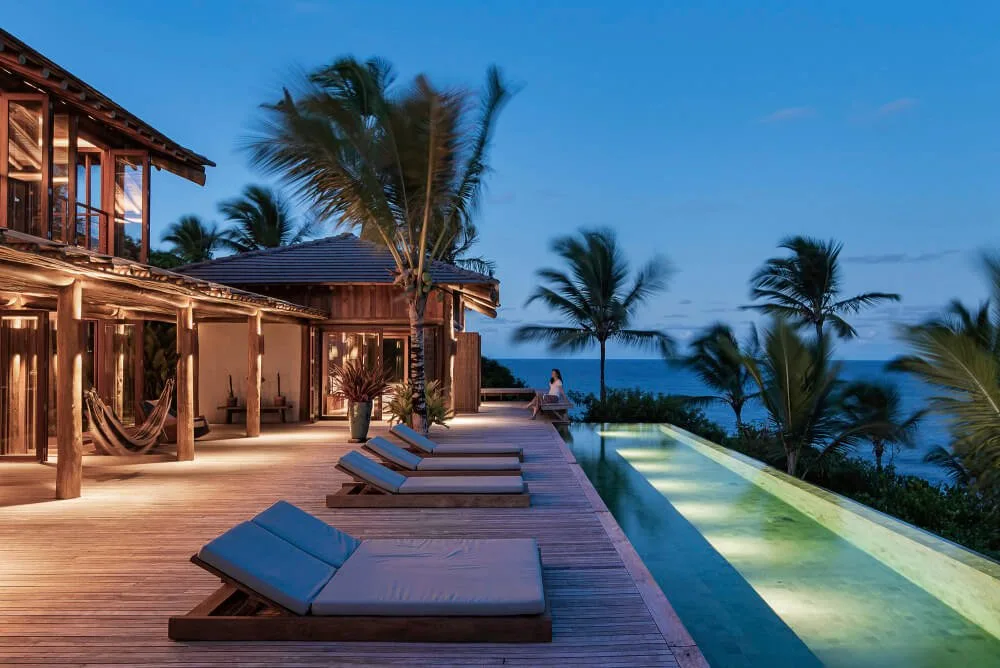
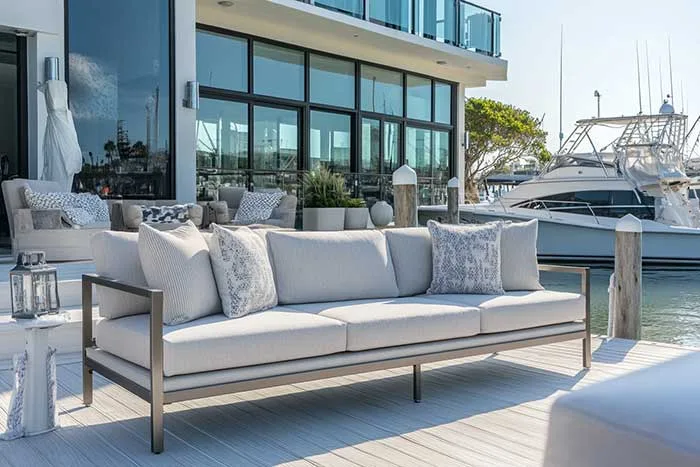
These GEORGE Group project and outdoor-furniture visuals show real hospitality settings and product-use relationships. The Brazil Beach Resort record does not list the exact outdoor-furniture supply scope, and the visuals do not establish a configuration-specific material result. Build the deck brief first, then match material, finish and maintenance evidence to the quoted configuration.
Movement and control
Decide what moves, what is managed and what may need an engineered fixing interface
Movable loungers can support daily layout changes but create handling and control work. Fixed or restrained items require coordination with the deck, waterproofing, structure, maintenance and local requirements. Do not select an anchoring method from a generic option list; the responsible project professionals and affected trades must approve the interface.
Record who repositions furniture, where it is stored, what happens during severe weather or maintenance, and whether staff need trolleys, covers, cushion racks or replacement components. Availability of those items must be confirmed in the project scope.
Inquiry brief
What to send for a pool or beach-club review
- Marked pool, deck or beach plan with clear routes and fixed features.
- Activity zones, guest capacity, approximate quantities and operating hours.
- Water, salt, sun, rain, wind, ground and cleaning conditions by zone.
- Moving, cushion, towel, storage and severe-weather procedures.
- Destination, access route, project stage, target timing and required product evidence.
Continue with sun lounger and daybed selection, fabric and cushion questions, and the outdoor exposure checklist.
Review the wet-area plan
Build the furniture brief around the deck, not a generic pool image
Share the site plan, zone conditions and operating routine. GEORGE Outdoor can then discuss relevant loungers, daybeds, lounge or dining categories and identify which configuration details need confirmation.